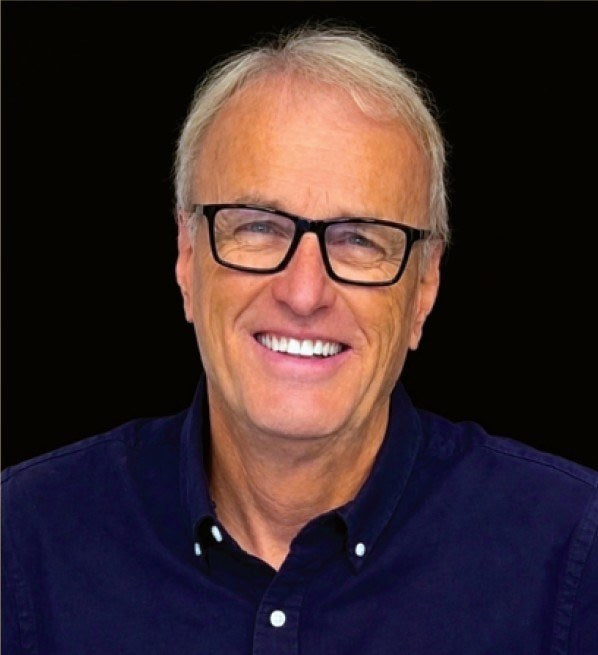
Glen Bell, PhDSocio-Economist, Author &“Master of Disaster”
“I’ve worked on disaster recovery cases for decades and the media calls me the ‘Master of Disaster.’
I investigate what went wrong so we can learn how to get it right. When facing real problems, junk science won’t work, while real solutions are grounded in a ‘Master Mindset.’
As a socio-economist, I’ve applied these concepts in legal cases to help secure billions in settlements and verdicts, as well as defeat baseless claims.
These six principles can help ordinary people achieve extraordinary results, and they’re the foundation of my books and presentations.”
— Glen Bell, PhD
Follow @drbellofficial
As seen on
The Master Mindset
MMoveTake action. Follow egos-logos-pathos-duos.
AAnalyzeThink critically. Be evidence-based.
SStep UpFace the problem. Don’t delay.
TTargetFocus intently. Lock in on your task.
EExpressCommunicate clearly & simply.
RRitualizeBuild habits. Practice Daily Quiet Time.
New release
Out January 5, 2027
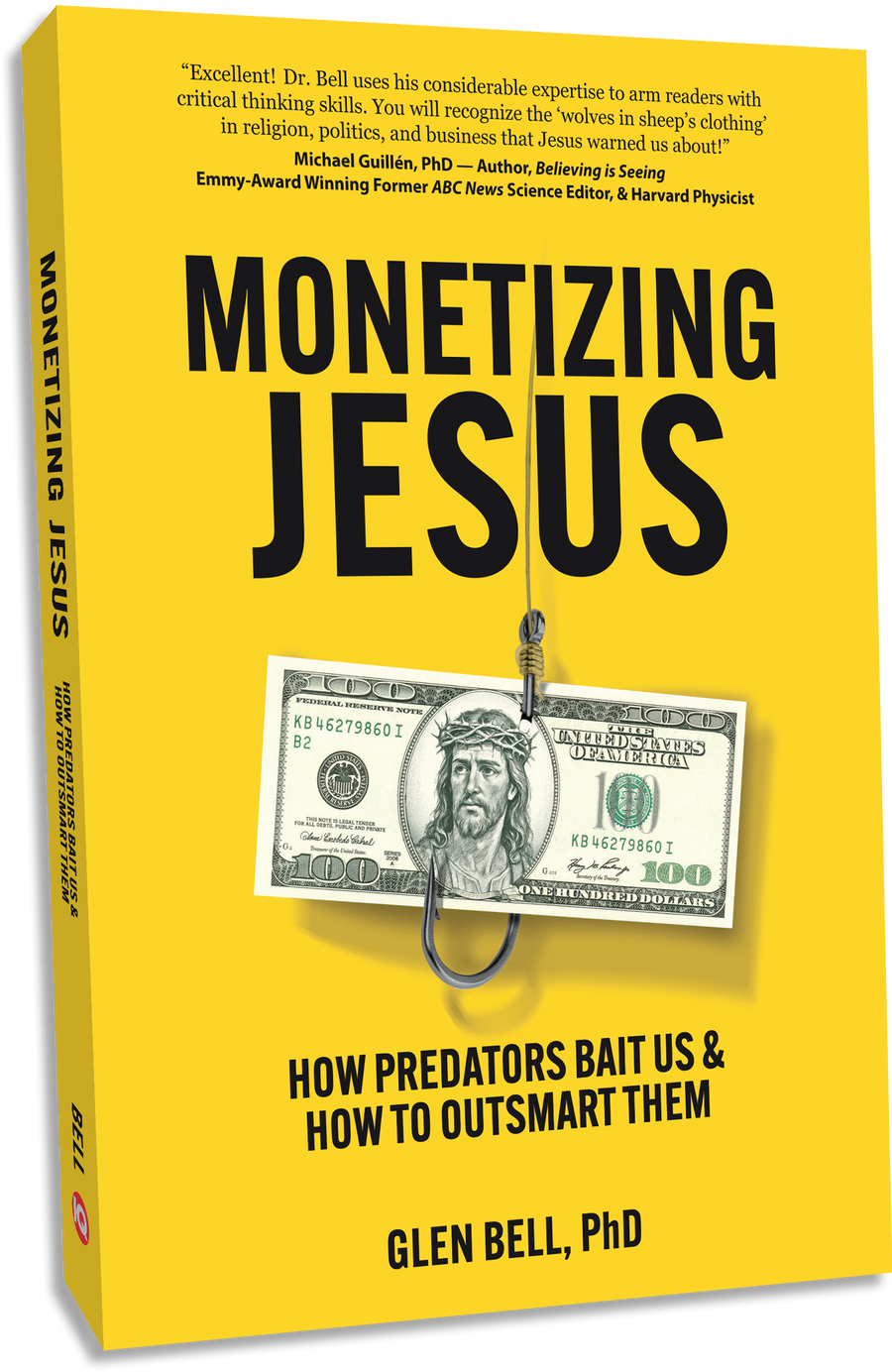
Monetizing Jesus
How predators bait us & how to outsmart them
Monetizing Jesus is not an attack on religion. It exposes how predators weave truth into their schemes, using revered figures, noble causes and sincere beliefs as bait to win trust and exploit others.
“Excellent! Dr. Bell uses his considerable expertise to arm readers with critical thinking skills. You will recognize the ‘wolves in sheep’s clothing’ in religion, politics, and business that Jesus warned us about!”Michael Guillén, PhD · Emmy Award–winning former ABC News Science Editor & Harvard physicist
Get the first chapter of Monetizing Jesus in your inbox.
No spam. Unsubscribe anytime.
Praise
What readers are saying
“
Provocative, but may surprise you… essential reading… and ought to be included in every Bible study class. An accessible guide to help readers improve critical thinking skills and media literacy, without compromising their own deeply held values.
In a world packed with people trying to profit from religion, people need to know how to spot, and then avoid, the charlatans. In this important, thorough, and valuable book, Glen Bell teaches readers exactly that.
Bill Tammeus“Faith Matters” blog; author, The Value of Doubt
“
This book teaches you to identify and steer clear of any religion, cult, political movement, or self-help group that seeks to convince you of something to serve their interests. A master tool for anyone going through a faith crisis.
Jeremy HinksHost, Sticky Jazz Podcast; Music Editor, Instinct Magazine
“
Jesus was not a marketing strategy. He was hope. He was justice. He was love, practiced in public. Monetizing Jesus courageously separates that radical compassion from the systems that profit off his name.
If you’re looking to reconnect to the Christ-like values that truly will make us great, Monetizing Jesus is a great place to start.
Stacy TothReal Talk, Whole Life Podcast
“
The way to avoid becoming the predator’s prey is to constantly work at becoming better informed and developing critical thinking skills.
Bob LittleChairman, Hertfordshire Fellowship of Baptist Preachers, UK
“
A bracing, necessary examination of what happens when faith is stripped of humility and weaponized for power, profit, and control. Both urgent and clarifying.
Christine WolfCo-author, Politics, Partnerships, & Power
“
Invites readers to discover a clearer, kinder path, one grounded in compassion, critical thinking, and genuine personal freedom.
Christopher Maynardfollowingfilms.com
“
Disinformation spreads faster than truth, especially when the world’s most influential figure is used as bait. Monetizing Jesus gives readers the tools to question, analyze, and push back.
Darren PaltrowitzPaltrocast
About Dr. Bell
Rebuilding lives after the unthinkable
Glen Randall Bell, PhD, is a sociologist and economist specializing in disaster research and recovery.
He has calculated billions of dollars in damages to help rebuild lives and communities, and lectures nationwide on critical thinking, logical fallacies, complex valuation and junk science.
Dr. Bell has been profiled in People, The Wall Street Journal, Rolling Stone, ABC’s 20/20 and NBC’s Today Show. He lives in Laguna Beach, California, and collects local art, guitars and Houdini memorabilia.
$Billionsin damages calculated
50 + 7states & continents researched
Courtsfederal, state & international
Consulted on
World Trade CenterNew York
Hurricane KatrinaGulf Coast
Bikini AtollNuclear test site
Heaven’s GateRancho Santa Fe, 1997
Sandy HookNewtown, Connecticut
O.J. SimpsonHigh-profile matters
Stories
Behind every statistic is a person.
From Heaven’s Gate, the 9/11 attacks, O.J., and Hurricane Katrina, Dr. Bell has spent 35 years researching disasters and how people and communities recover. These are the stories from the ground.
New Orleans, LA · 2005
Hurricane Katrina
When the water rose, so did the human spirit.
Floodwater covers New Orleans neighborhoods, August 30, 2005. Photo: Jocelyn Augustino/FEMA, via Wikimedia Commons.
On August 29, 2005, Hurricane Katrina made landfall in southeastern Louisiana and along the Mississippi coast as a Category 3 hurricane. Its storm surge and the failures of flood protection in New Orleans produced catastrophic flooding, widespread destruction, and mass displacement.
Dr. Bell
I was retained to measure the disaster’s economic impact on tens of thousands of homeowners and several businesses. When I first toured the site, the water was still receding. The destruction was truly shocking. The search for bodies was still underway, and search teams sprayed an “X” on each home with the inspection date and the number of bodies recovered. There were cars in trees, cargo containers in backyards, boats in the middle of neighborhoods, and mud several feet high.
Then I saw something remarkable. A flood of volunteers was there to help. Some families withdrew all their money from their bank accounts, loaded their cars with food and blankets, and set out to find other families in need. I have noticed the goodness in human behavior in every disaster I have studied. As bad as these disasters are, the human spirit is always greater.
New York, NY · 2001
World Trade Center
When the headlines fade, recovery continues.
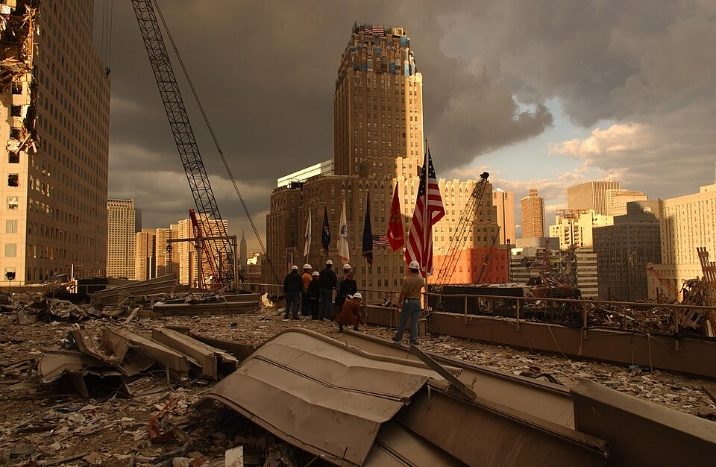
Debris covers rooftops around the World Trade Center site, September 28, 2001. Photo: Andrea Booher/FEMA, via Wikimedia Commons.
On September 11, 2001, radical Islamic terrorists flew two hijacked passenger aircraft into the World Trade Center’s Twin Towers in New York City. Both towers collapsed, causing catastrophic loss of life and destruction throughout the surrounding area.
Dr. Bell
I first encountered the site as I was already scheduled to be in New York to give a lecture on September 17th, just six days later. I assumed the event would be canceled, but it went forward. After the event, I took the subway to the WTC site, and it was shocking. Smoke from underground fires was still billowing, and I was approached by people on the street, passing out flyers and looking for their loved ones. What we had seen on TV did not capture the grief and disbelief at “Ground Zero.”
Later, I was retained by the landowner, the Lower Manhattan Redevelopment Corporation, to conduct a highest-and-best-use study of the site and determine its value as a memorial.
My primary memory was that the emotional shock of the event was so intense that I just focused on the job I needed to do, which included researching memorials around the world.
Marshall Islands · 1946–58
Bikini Atoll
School gives us lessons, followed by tests. Life gives us tests, followed by lessons.
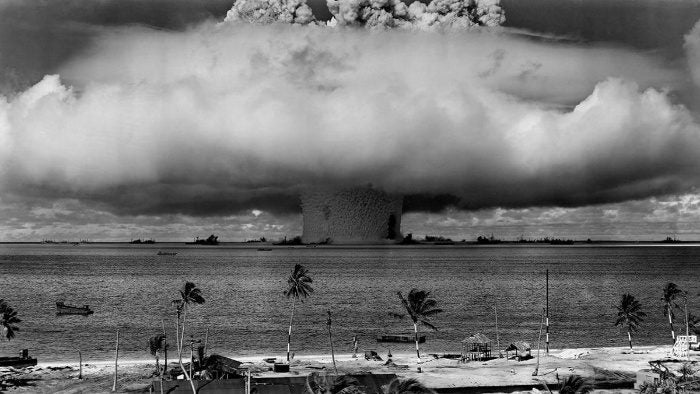
Operation Crossroads nuclear test at Bikini Atoll, July 25, 1946. Photo: U.S. Department of Energy/NNSA, via Wikimedia Commons.
Between 1946 and 1958, the United States conducted 23 nuclear tests at Bikini Atoll in the Marshall Islands, following the displacement of its residents. Those tests included Castle Bravo on March 1, 1954, which caused extensive radioactive contamination.
Dr. Bell
When I was retained by the Nuclear Claims Tribunal to measure the economic impacts of the testing on the islands, I flew to Hawaii, spent the night, and then flew 7 hours to the Marshall Islands. It is remarkably remote. Then we flew for hours to the outer atolls where the testing happened. When I finally got there, I saw a man standing alone in the distance. I went up to him and said, “Hello.” He turned out to be John Anjain, a local islander. John took me to the site of his old home. He told me that he was up in the morning, making coffee for his wife and himself, when he saw “two suns come up that day,” one being the real sun and the other a nuclear blast. Later, his daughter danced in the grey ash that fell on the islands, but it turned out to be nuclear fallout. Sadly, his daughter died in a military hospital.
John Anjain’s story was so powerful that it motivated me to spend years researching and calculating economic damage. I testified to the Nuclear Claims Tribunal twice, and they eventually awarded the full $2 billion in damages I testified to.
Shanksville, PA · 2001
Flight 93
Behind every statistic is a person.
Memorial Plaza and Wall of Names, Flight 93 National Memorial. Photo: Andre Carrotflower, CC BY-SA 4.0, via Wikimedia Commons.
On September 11, 2001, hijacked United Airlines Flight 93 crashed near Shanksville, Pennsylvania, killing its 40 passengers and crew members. After learning of the other attacks, passengers and crew fought back, thwarting the hijackers’ planned attack on Washington, D.C.
Dr. Bell
I received a call from the owner of the land where the crash occurred. The first time I inspected the site was memorable: it was bitterly cold, and I saw the temporary memorial the property owner had constructed. I have so much respect for the heroes who fought back against the terrorists, and it was amazing to see a constant flow of people who came to pay their respects. Their collective response offers an extraordinary example of people acting together, even when the personal cost could be everything. I learned a long time ago that behind every statistic is a person, and I try to respect them as I go about my work.
Rancho Santa Fe, CA · 1997
Heaven’s Gate
Extremes rarely end well.
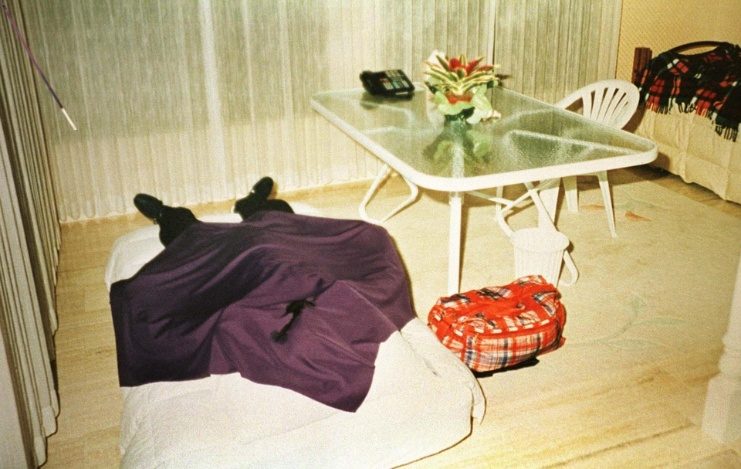
Interior of the Rancho Santa Fe residence, released March 27, 1997. Photo: San Diego County Sheriff’s Department, via Wikimedia Commons.
On March 26, 1997, sheriff’s deputies discovered 39 members of Heaven’s Gate dead in a rented mansion in Rancho Santa Fe, California. The deaths were the result of a coordinated mass suicide tied to the group’s extreme religious beliefs.
Dr. Bell
I received a call from the owner of Heaven’s Gate Mansion. He told me he needed me to assess any damage to his home caused by the mass suicide. He also said they were still removing bodies. I told him I would wait until they were done, as I had no morbid curiosity and did not need or want to see that. A day later, I walked into Heaven’s Gate Mansion for the first time. My first impression was how bad the house smelled. As I walked around, I noticed clues about how the cult’s leader “Doe” restricted normal behavior to repeatedly reinforce his twisted ideology. Every jar, closet, and light switch was labeled so cult members never had to think for themselves. They all had a “companion” who went with them everywhere and monitored each other’s behavior. They attended endless meetings in the large living room and heard the same false messages over and over again. It was then that I noted the Illusory Truth Effect, which means that repetition of a lie will beat rational thought and truth – every time.
In my book, Monetizing Jesus, I discuss how sincerity and certainty cannot determine whether a belief is true. When a leader demands unquestioning obedience, we must exercise our right to think for ourselves, ask questions, examine evidence, and recognize walking away as a vital option.
Los Angeles, CA · 1994
O. J. Simpson Case
A wake-up discussion on domestic violence.
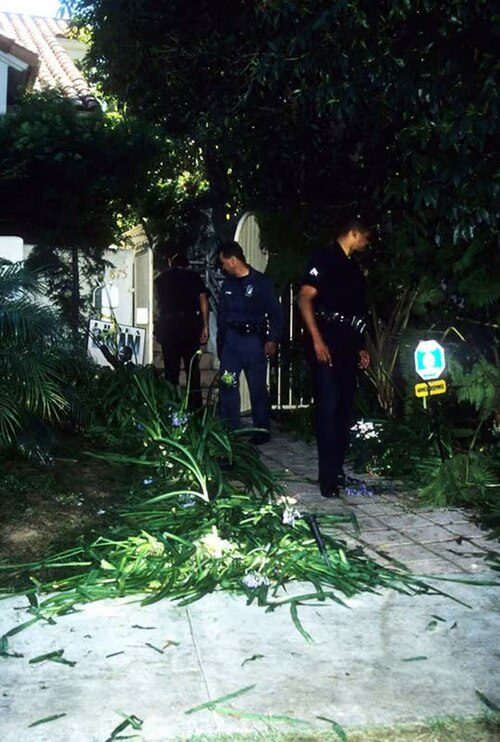
Police at the Bundy Drive scene in Brentwood, June 1994. Photo: Los Angeles Police Department, via Wikimedia Commons.
On June 12, 1994, Nicole Brown Simpson and Ronald Goldman were murdered outside her condominium in Brentwood, Los Angeles. O. J. Simpson was acquitted in the 1995 criminal trial, while a separate civil jury in 1997 found him liable in connection with their deaths.
Dr. Bell
I assisted Mr. Lou Brown, the father of Nicole, to deal with the crime scene on Bundy Avenue. While every disaster has its devastating effects, there are also emotional issues. Lou was a very calm and dignified man, but he and I would often have lunch together, during which he shared his feelings, and to this day I have never shared anything he confided in me. But I will say that his love and grief over the loss of his daughter were inexplicable.
One day, I was in the Brown family’s home where I was invited to sit at their dining table and have a drink. It was a day when Denise Brown, Nicole’s sister, decided to channel her anger into a positive cause, and that was to open up the national conversation about domestic violence. She explained to me how physical abuse can heal in a couple of weeks, but emotional and sexual abuse can last a lifetime. As a result of her work, countless women got the courage to leave abusive relationships.
Boulder, CO · 1996
JonBenét Ramsey
Behind the headlines and obsessions was a little girl.
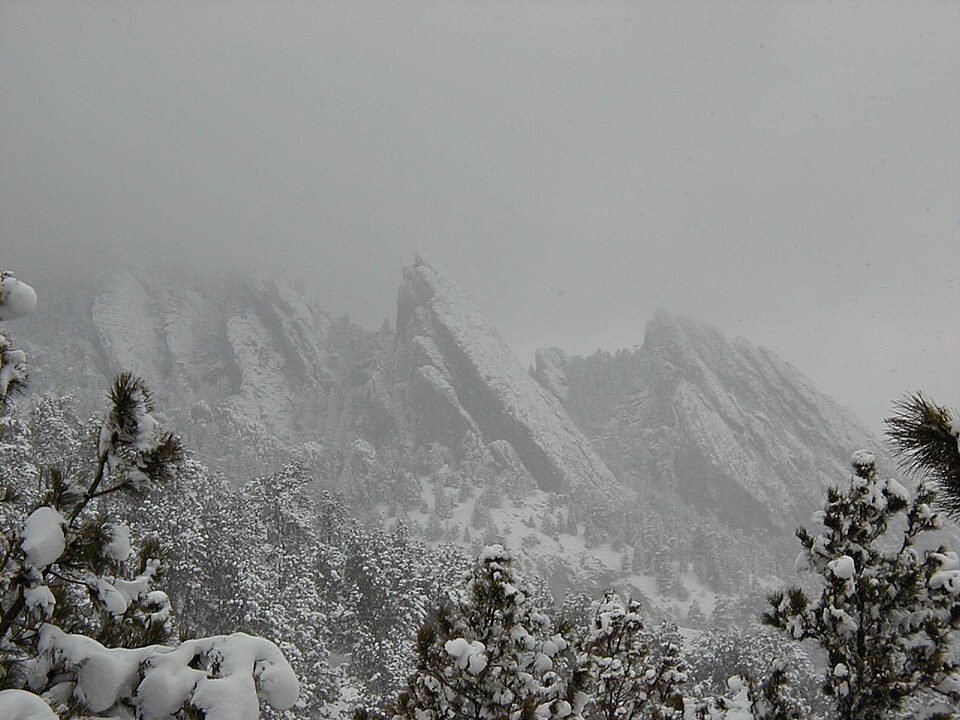
The Flatirons above Boulder, Colorado, in winter. Photo: Wendell Smith, CC BY 3.0, via Wikimedia Commons.
On December 26, 1996, six-year-old JonBenét Ramsey was reported missing from her family’s home in Boulder, Colorado, after a ransom note was discovered. Later that day, she was found dead in the basement. Her death was ruled a homicide.
The killing became a national media obsession. Images of JonBenét competing in children’s beauty pageants circulated widely, while speculation about her family and a possible intruder often overshadowed the child herself. Despite intense scrutiny, no one has been successfully prosecuted for her murder.
Dr. Bell
I computed the economic damage of the Ramseys’ home for JonBenét’s parents. They were under a wave of suspicion and harsh public criticism. But to be fair, I also met with the prosecutor and detective who led the case. I told them that we will never know who murdered this little girl, because the Boulder police had failed to secure the crime scene, and as a result, the evidence was largely compromised. This fueled more headlines and public obsessions, but frankly nobody knows, and nobody will ever know.
Nearly three decades later, the case remains open. Investigators continue to review evidence, pursue leads, and use advances in DNA testing in the search for answers. Behind the enduring mystery is a six-year-old girl whose life ended before she had the chance to grow up.
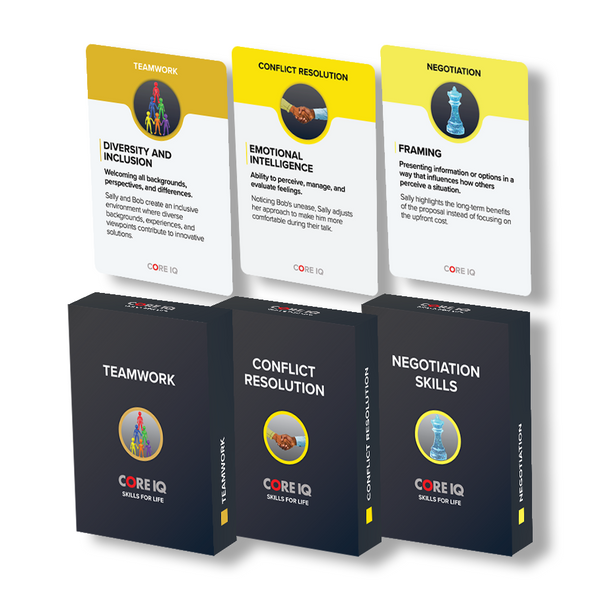
Grounded in 25 years of research, these decks put the tools used daily in professional research environments in your hands, from spotting cognitive bias to setting goals that stick.
Critical ThinkingLogical FallaciesCognitive BiasTeamworkNegotiationResearch MethodsPersonal FinanceGoal Setting+4 more